








New Delhi, June 11
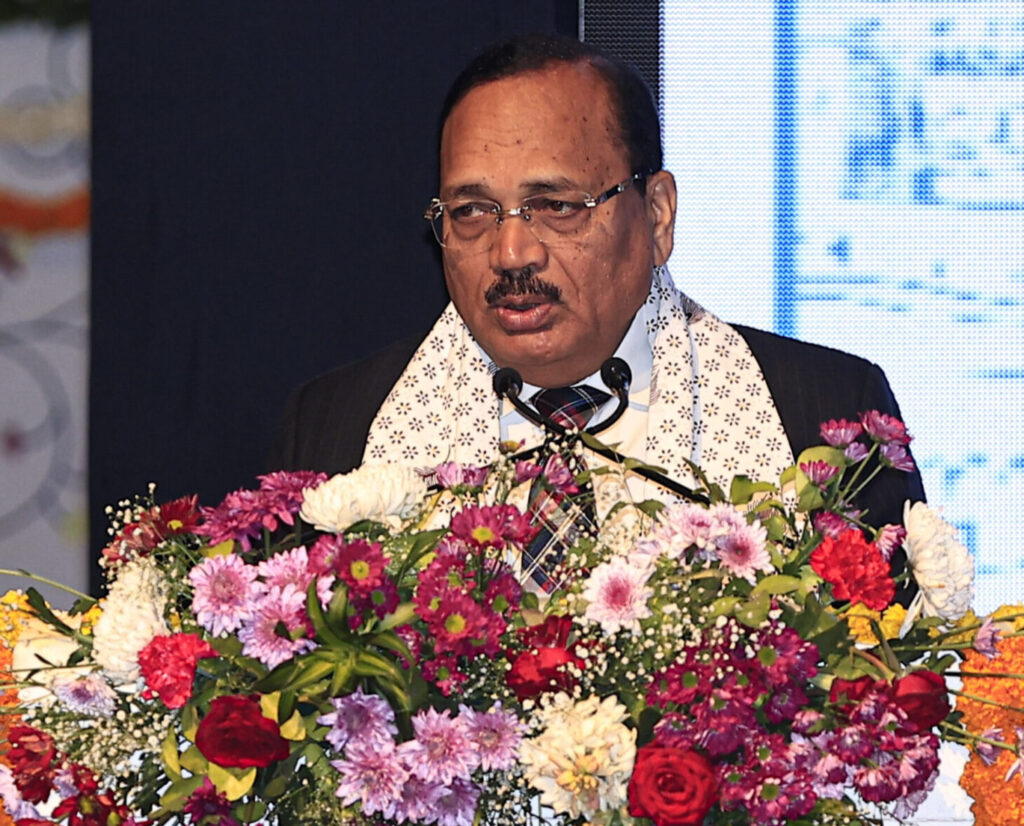
India’s judiciary has spent years promoting mediation as more than just an alternative to litigation, Chief Justice of India Surya Kant has said during a discussion in London, describing it as a powerful tool for resolving disputes quickly and amicably.
Speaking at a panel on “Technology and the Future of Mediation” hosted by the Indian High Commission in London, Justice Kant said mediation was “very close to my heart” and highlighted the growing awareness of the process across India.
“I can say proudly that in every town, in every street, people know what mediation is,” he said.
The event brought together senior legal and judicial figures from India and the United Kingdom, including Lord Hamblen of Kersey of the UK Supreme Court, Bar Council of England and Wales President Kirsty Brimelow KC, and Law Society Vice President Brett Dixon. Justice Kant traced the development of mediation in India, dividing its journey into two phases: before and after the enactment of the Mediation Act, 2023.
According to him, Indian courts had been actively encouraging mediation long before it received statutory backing. Recalling his early years as a High Court judge in 2004, he noted that mediation centres were gradually established at trial courts, High Courts and the Supreme Court.
“The Mediation Act, 2023 is the culmination of a statutory and judicially created regime that has evolved over decades,” he said. The Chief Justice also highlighted efforts to build a nationwide mediation framework. He said the Supreme Court Legal Services Committee has developed a large pool of trained mediators, while State Judicial Academies, the National Legal Services Authority and Lok Adalats have played an important role in familiarising citizens with consensual dispute resolution.
When asked whether mediation should be preferred over arbitration, Justice Kant said both mechanisms serve important purposes, particularly as expanding commercial ties between countries often lead to disputes.
However, he argued that parties should first explore mediation because it is generally faster, less expensive and helps preserve business relationships.
Drawing a distinction between the two systems, he said arbitration awards frequently become the subject of further litigation, whereas successful mediation usually ends the dispute altogether.
“In arbitration, the passing of an award is often the beginning of further litigation. In mediation, once the process is successfully concluded, it brings closure to the dispute. That is the beautiful difference between mediation and arbitration,” he said.
Jabalpur, June 26 The Madhya Pradesh High Court on Thursday dismissed a defamation case against…
New Delhi, June 25 Prime Minister Narendra Modi on Thursday described the Emergency imposed in…
The Centre government has said that a passport has never been considered conclusive proof of…

Venezuela, June 25 At least 164 dead, 971 people injured after two powerful earthquakes struck…