Spread the news
New Delhi, June 27
Punjab remained at the centre of India’s battle against drug trafficking in 2025, accounting for nearly 58 percent of all heroin seized nationwide and almost every recorded case of drone based drug smuggling along the India-Pakistan border, according to the annual report released by the Narcotics Control Bureau (NCB).
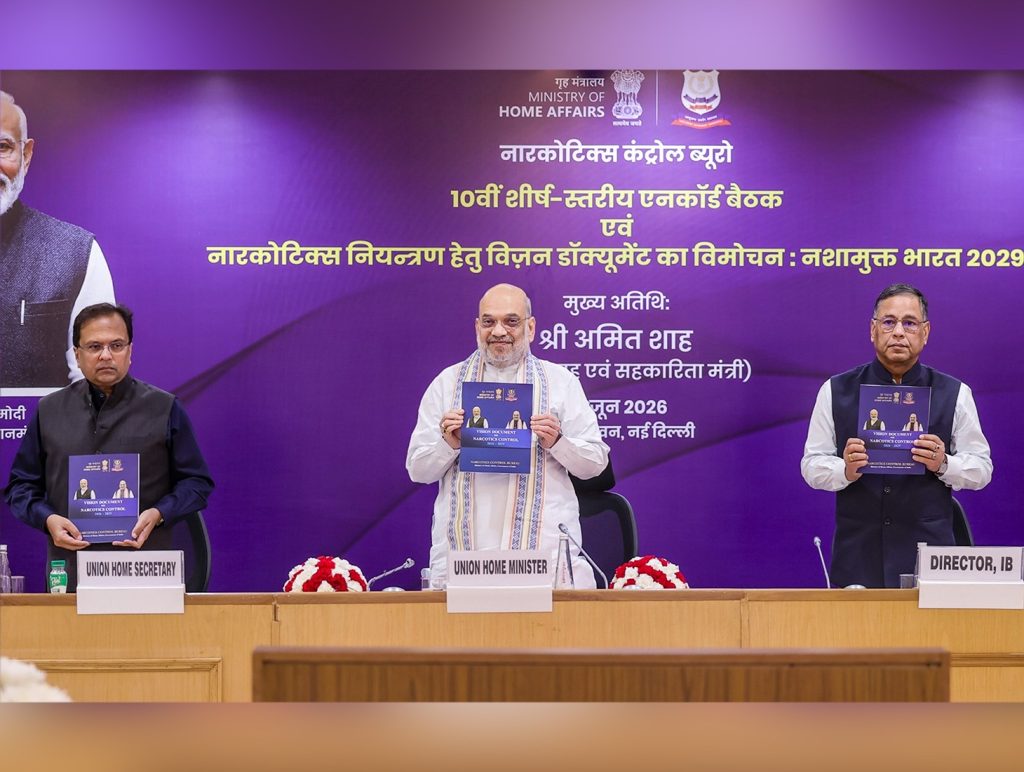
The report, unveiled by Union Home Minister Amit Shah during a meeting of India’s top anti-narcotics agencies in New Delhi, also warned of what it described as a “dangerous second wave” of pharmaceutical drug abuse, with Punjab recording the country’s highest seizure of codeine-based cough syrup.
According to the 2025 report, authorities seized 2,085.55kg of heroin in Punjab out of a national total of 3,567kg. The figures, the NCB said, reinforce Punjab’s position as the primary gateway for heroin trafficked through the so-called Golden Crescent — the Afghanistan-Pakistan-Iran drug corridor.
Although the total quantity of heroin seized has declined compared with previous years, officials noted that the number of individual cases has risen. The report suggests traffickers are increasingly transporting smaller consignments to reduce the risk of detection as enforcement intensifies.
The use of drones to transport narcotics has also reached unprecedented levels.
Authorities registered 305 drone-related drug trafficking cases in 2025, a sharp rise from 179 cases a year earlier. Punjab accounted for 289 of those incidents — more than 97% of the national total — while the remaining cases were reported in Rajasthan and Jammu and Kashmir.
The quantity of drugs recovered through drone operations also doubled over the past year, rising to 468kg, mainly heroin. The report described the five-year growth as evidence that trafficking networks have become increasingly sophisticated in using unmanned aerial vehicles to bypass traditional border security.
Alongside heroin trafficking, the NCB expressed growing concern over the diversion of legitimate pharmaceutical medicines into illegal markets.
Punjab recorded the seizure of 895,508 bottles of codeine-based cough syrup in 2025, the highest among all states. The report described pharmaceutical opioids as a “dangerous second wave”, warning that medicines such as Buprenorphine, Tramadol and Alprazolam are increasingly being misused because they are relatively inexpensive and can be obtained through non-compliant pharmacies.
Officials said the trend reflects a broader national challenge. While India pharmaceutical industry is globally recognised for producing affordable medicines, the report warned that its scale also creates opportunities for illegal diversion into underground drug networks.
The report highlighted another emerging concern — hydroponic cannabis, which is grown without soil and typically has higher psychoactive potency than conventionally cultivated cannabis. Seizures increased from 303kg in 2021 to 4,862kg in 2025, with nearly 98% of recoveries made at airports.
Beyond mainland India, investigators also flagged the increasing use of the Andaman and Nicobar Islands by international drug trafficking networks. The report said isolated islands are being exploited as temporary storage points and mid-sea drop-off locations for large narcotics consignments.
It warned that, without a permanent enforcement presence, the islands risk becoming an important transit hub for drug syndicates linked to the Golden Triangle region of Southeast Asia.
The report also pointed to India’s growing exposure to international trafficking networks. Of the 747 foreign nationals arrested in narcotics cases during 2025, the largest numbers came from Nepal, Nigeria and Myanmar.
Punjab Chief Minister Bhagwant Mann has repeatedly pledged to eliminate drug trafficking from the state through the government’s anti-drug campaign, “Yudh Nashean Virudh”, saying authorities are determined to dismantle organised narcotics networks.