







North News
New Delhi, February 1
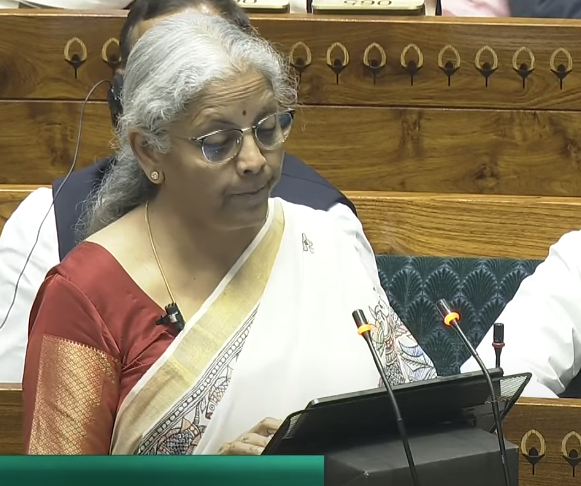
Finance Minister Nirmala Sitharaman presented the Union Budget for 2025-26 in Parliament today, unveiling key measures to support domestic manufacturing, reduce costs for consumers, and promote exports. The budget includes a focus on rationalizing the tariff structure and addressing duty inversion, with several proposals aimed at bolstering India’s manufacturing capabilities, particularly in electric vehicles (EVs) and mobile phone production. One of the major announcements was the exemption of basic customs duty (BCD) on life-saving drugs, mobile phone batteries, and critical materials such as cobalt, lithium-ion battery scrap, and certain minerals. This move is expected to lower prices for consumers, while promoting domestic manufacturing of EVs and mobile phones. Sitharaman announced the addition of 35 capital goods for EV battery manufacturing and 28 for mobile phone batteries to the list of exempted items.
The budget also proposes a reduction in customs duties on several goods, including frozen fish paste, LED products, and marine products, while extending BCD exemptions for shipbuilding materials for another decade. It is hoped these measures will further develop India’s manufacturing sectors and create more job opportunities. For consumers, mobile phones, motorcycles, and imported cars are set to become cheaper, while certain products like smart meters, solar cells, and imported footwear will face higher duties.
In a bid to support the shipbuilding industry, Sitharaman proposed the continuation of exemptions for raw materials, parts, and consumables needed for ship production. Similarly, the budget also includes steps to make the aircraft and ship maintenance, repair, and overhaul (MRO) sector more competitive.
Export promotion is another focus, with provisions to support handicraft exports by extending the time limit for export and removing export duties on crust leather. A reduction in BCD on frozen fish paste will also make India’s seafood industry more competitive in global markets.
To improve the ease of doing business, the Budget proposes to introduce clearer timelines for customs procedures, including a new two-year limit for finalizing provisional assessments, extendable by one year. The import-export process will also see more flexibility, with the introduction of voluntary compliance for importers and exporters.
The government has emphasized that these measures are designed to make India’s manufacturing and export sectors more competitive, promote domestic production, and lower costs for the average consumer.
Chandigarh, June 26 Retired Deputy Inspector General (DIG) of Punjab Police, Inderjit Singh Sidhu, on…

Dehradun, June 26 A tense standoff between Nihang Sikhs and police at the Himachal Pradesh…
Jabalpur, June 26 The Madhya Pradesh High Court on Thursday dismissed a defamation case against…
Chandigarh, June 25 The National Council of Educational Research and Training (NCERT) has added a…